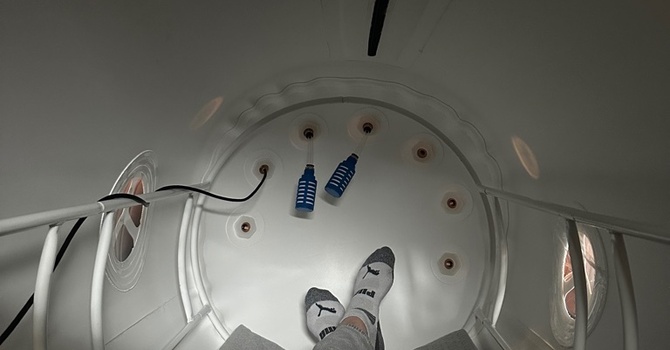
Hyperbaric oxygen therapy (HBOT) is getting a lot of attention right now- and for good reason.
But if you’ve looked into it, you’ve probably run into the same issue most people do—conflicting information.
Different pressures. Different protocols. Different opinions on what actually works.
Here’s what the research is showing—and what actually matters if you’re trying to improve your health, performance, or recovery.
Does HBOT Pressure Matter? Yes—But Not the Way You Think
Most protocols fall into two categories:
1.3 ATA (mild hyperbaric therapy)
2.0 ATA (higher clinical pressure)
- Here’s what the research shows:Both levels create real, measurable biological changes
- Higher pressure tends to produce faster shifts
- Lower pressure still delivers consistent benefits over time
That last point matters.
Because a lot of people assume mild HBOT “doesn’t work.”
That’s not accurate.The body responds across a range. It’s not all-or-nothing—it’s about consistency and application.
Inflammation:
If you’re dealing with:
- Fatigue
- Brain fog
- Slow recovery
- General lack of energy
There’s often an inflammatory component involved.
What’s interesting is that HBOT—at both pressure levels—has been shown to influence inflammatory signaling.
In plain terms:The body starts shifting out of a stressed, reactive state.
And we see this all the time.
People don’t feel right, but their labs come back “normal.”That doesn’t mean nothing’s wrong.
It means we haven’t identified the underlying drivers yet.
Brain Function:
HBOT has also been shown to improve cognitive performance.
Not just from oxygen—but from improved:
- Cellular energy production
- Blood flow and oxygen delivery
- Neurological signaling
What does that look like?
Clearer thinking. Better focus. More mental endurance.
It’s not about forcing performance—it’s about removing what’s limiting it.
Aging:
One of the most compelling areas of research around hyperbaric oxygen therapy is its effect on biological aging.
Researchers looked at DNA methylation—one of the key markers used to estimate how fast your body is aging.
They analyzed hundreds of thousands of data points.
And what they found was this:HBOT influenced those aging markers.
Meaning the body didn’t just respond—it adapted in a way associated with improved longevity.
That reinforces something important:Aging isn’t just about time. It’s about environment—and how your body responds to it.
Why Recovery Matters (More Isn’t Always Better)
Here’s something a lot of people overlook:You don’t get better just by doing more.
The research showed that taking breaks between HBOT sessions actually improved outcomes.
That makes sense.
The body doesn’t adapt during the stress. It adapts during recovery.
That principle applies across the board—rehab, training, and therapies like HBOT.
Bottom Line:
Here’s what the research supports:
- Hyperbaric oxygen therapy creates real biological change
- Both low and high pressure protocols are effective
- Inflammation, brain function, and aging markers can improve
- Recovery is essential for results.
Your body is not static—it’s responsive. And when you give it the right tools, it knows what to do.
Lincoln Clifford
Contact Me